
News Summary
A powerful 8.8 magnitude earthquake struck near the Kamchatka peninsula in Russia’s Far East, triggering tsunami concerns across the Pacific. Waves reached Japan and Alaska, prompting evacuations. The tremors also caused a volcanic eruption. Preparedness efforts are underway as officials monitor the situation, raising alarms across the Pacific region for potential geological hazards and response readiness.
Petropavlovsk-Kamchatsky, Russia – A powerful 8.8 magnitude earthquake struck near the Kamchatka peninsula in Russia’s Far East on July 30, raising significant tsunami concerns across the Pacific. The earthquake, one of the strongest in decades, triggered tsunami waves that reached Japan and Alaska, prompting evacuation orders in both regions. Tsunami warnings extended throughout North and Central America and into Pacific Islands as far south as New Zealand, indicating a widespread response to the seismic activity.
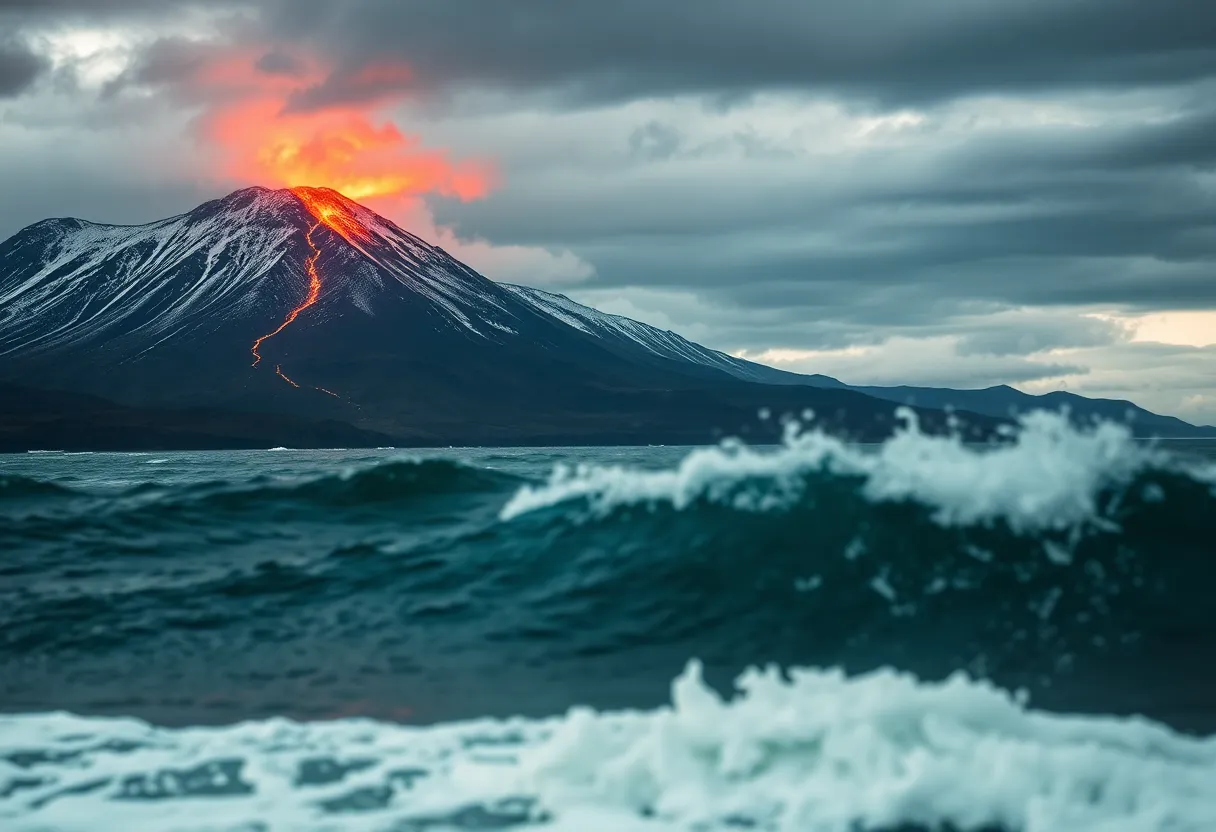
The tremors, occurring at a depth of 17 kilometers about 149 kilometers southeast of Petropavlovsk-Kamchatsky, also sparked a volcanic eruption at Klyuchevskaya Sopka, the highest active volcano in Russia. In preparation for potential hazards, inspections of critical infrastructure were initiated by local authorities.
The National Oceanic and Atmospheric Administration (NOAA) defines a tsunami as a series of waves resulting from large and sudden ocean displacements, with the most common cause being large earthquakes on the ocean floor. Other potential triggers include landslides, volcanic activity, meteorites, and certain weather phenomena. Tsunamis, while infrequent in the U.S., pose significant threats to life and property when they do occur.
Despite Florida’s location on the eastern coast of the United States, the Florida Division of Emergency Management (FDEM) states that the probability of a tsunami impacting its coastline is “extremely low.” This assessment is due to the minimal seismic activity in the region. Nevertheless, officials caution that Florida is not entirely free from tsunami risks. They highlight the potential dangers that could arise from geological events such as massive landslides, including scenarios involving the Cumbre Vieja volcano in the Canary Islands, which could generate tsunamis affecting Florida’s eastern coastline.
Historically, Florida has experienced four minor tsunami events along its Atlantic Coast. These include two tsunamis caused by earthquakes in the Caribbean, one from an Atlantic earthquake, and another from a non-Atlantic earthquake. Notably, no documented tsunamis have impacted the Gulf Coast of Florida. There have, however, been instances of rogue waves; a 1992 incident in Daytona resulted in one fatality and over 75 injuries, attributed to anomalous storm front winds. Another rogue wave event occurred in 1995 along the coast from Tampa to Naples, emphasizing the rare but possible impact of unexpected ocean phenomena.
In response to the recent earthquake, initial tsunami waves reached Japan’s Hokkaido Island early on July 30. The Fukushima Nuclear Plant, which previously suffered damage during the 2011 tsunami, also initiated evacuation measures due to heightened tsunami concerns. Tsunami alerts were similarly issued in New Zealand, China, the Philippines, and Indonesia as a precaution following the quake.
The earthquake has raised awareness of the geological volatility in the Pacific region, particularly along significant fault lines in areas such as the Pacific Ring of Fire, where seismic activities frequently occur. States such as California, Oregon, and Alaska are deemed more vulnerable to tsunamis due to their proximity to tectonic plates that generate these powerful oceanic waves.
The Kamchatka Governor relayed that the earthquake’s strength prompts heightened vigilance regarding the region’s infrastructure and disaster response readiness. Amid such unprecedented seismic events, emergency management officials continue to monitor the situation closely, balancing immediate safety measures with long-term disaster preparedness strategies.
Deeper Dive: News & Info About This Topic
HERE Resources
Additional Resources
- WTSP: Has Florida Ever Had a Tsunami?
- Wikipedia: Tsunami
- The New York Times: Russia Earthquake in Kamchatka
- Google Search: Kamchatka earthquake
- Kyiv Independent: Earthquake Triggers Tsunami Warnings
- Encyclopedia Britannica: Earthquake
- The Moscow Times: Aftermath of the Historic Earthquake
- Google News: Earthquake Kamchatka


Author: STAFF HERE TAMPA WRITER
The TAMPA STAFF WRITER represents the experienced team at HERETampa.com, your go-to source for actionable local news and information in Tampa, Hillsborough County, and beyond. Specializing in "news you can use," we cover essential topics like product reviews for personal and business needs, local business directories, politics, real estate trends, neighborhood insights, and state news affecting the area—with deep expertise drawn from years of dedicated reporting and strong community input, including local press releases and business updates. We deliver top reporting on high-value events such as Gasparilla Pirate Festival, Florida State Fair, and Tampa Riverfest. Our coverage extends to key organizations like the Tampa Bay Chamber of Commerce and United Way Suncoast, plus leading businesses in healthcare, finance, and technology that power the local economy such as BayCare Health System, Grow Financial Federal Credit Union, and KnowBe4. As part of the broader HERE network, including HEREJacksonville.com, HEREOrlando.com, HERESTPetersburg.com, and HERETallahassee.com, we provide comprehensive, credible insights into Florida's dynamic landscape.