
News Summary
In Tampa, a partnership between Youjung Kim of USF and the Access 3D Lab is utilizing LiDAR technology to investigate how home elevation impacts the risk of hurricane flooding. This research aims to provide insights for future regulatory decisions as climate change continues to increase flood risks. Kim’s findings reveal that homes with higher first-floor elevations are less likely to suffer significant damage during floods. The study focuses on the Davis Islands but may extend to other flood-prone areas in Tampa.
Tampa, Florida — A recent collaboration between Youjung Kim, an assistant professor at the University of South Florida’s School of Public Affairs, and the Access 3D Lab highlights the critical issue of home vulnerability to hurricane flooding. This partnership focuses on utilizing advanced digital technologies, specifically Light Detection And Ranging (LiDAR) technology, to analyze factors that increase the risks of flooding during hurricanes.
The Access 3D Lab is known for its expertise in advancing digital technologies and analyzing 3D data across various disciplines, including STEM and the arts. Kim initiated this collaboration in November after discovering the lab’s capabilities in LiDAR technology, which employs lasers, GPS, and an inertial navigation system to generate highly detailed 3D data of various locations, as detailed by the United States Geological Survey.
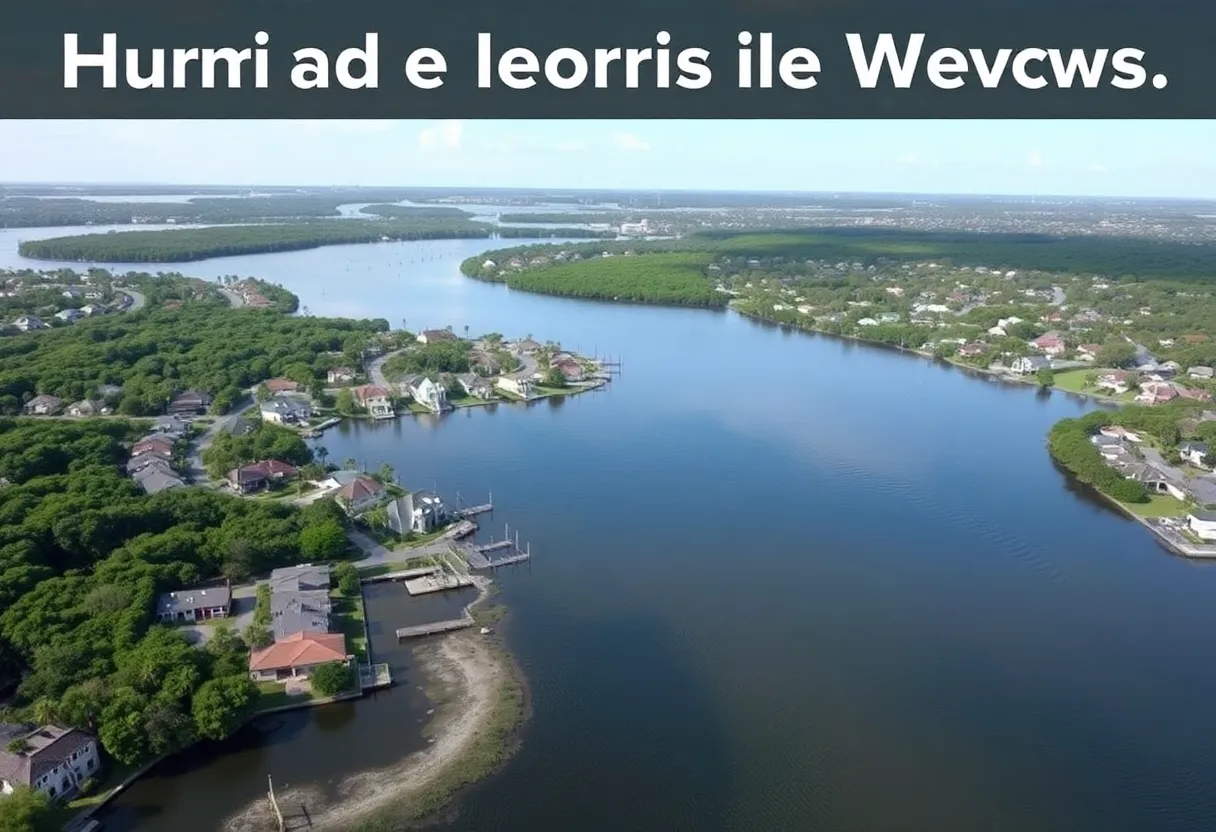
Keen to address the growing concern of flooding in residential areas, Kim began his research in October on the Davis Islands, a region located south of Downtown Tampa. The focus of Kim’s work is to understand how home elevation impacts vulnerability to flooding. His inquiry was prompted by observing significant variations in flood damage levels among houses situated within the same flood zone following Hurricane Milton, a category five hurricane that inflicted an estimated $34.4 billion in damages.
Using LiDAR technology, Kim analyzed the first-floor elevations of homes on Davis Islands. His findings indicate that the elevation of a home’s first floor is a crucial variable in determining its risk of flood damage. Homes that maintain a higher first-floor elevation correspond to a lower likelihood of experiencing significant damage during floods.
Data collection, which took place between December of the previous year and January this year, was executed through a method involving the attachment of a GPS, LiDAR, and a camera to Kim’s vehicle as he surveyed the targeted areas of Davis Islands. This innovative approach allowed for rapid and accurate data collection, meeting both budgetary and time constraints essential for the study.
It is important to note that regulations on Davis Islands dictate homeowners must situate their first-floor elevation above flood height, currently set at 12 feet above sea level. Nevertheless, Kim anticipates potential changes to these elevation standards as rising sea levels pose increasing challenges in the coming decades. His analysis suggests that regulatory adjustments may be necessary as flood risks evolve with the gradual rise of sea levels over the next 30 to 40 years.
Kim’s research is primarily centered on the Davis Islands; however, he has expressed a desire to extend this study to other neighborhoods in Tampa that are also classified as flood zones. As Kim continues his investigation, he seeks to build a comprehensive understanding of how home elevation impacts flood resilience across various communities.
In supporting Kim’s research, Laura Harrison, the founder and director of Access 3D Lab, played a key role in connecting the professor’s research needs with the lab’s technological capabilities. The lab’s recent acquisition of LiDAR technology in 2023 proved to be instrumental in facilitating this analysis. As climate change and natural disasters become increasingly pronounced issues, the information gathered from this study may help inform future regulatory decisions that could influence public safety and residential integrity in vulnerable areas.
As the research progresses, Kim’s work is expected to yield insights that will not only aid in protecting homes from the effects of flooding but also contribute to broader discussions on infrastructural resilience in the face of climate change.
Deeper Dive: News & Info About This Topic
HERE Resources
Moez Limayem Announced as Finalist for USF President
New Flood Disclosure Law for Florida Renters
University Enhances CRIS-HAZARD App for Flood Monitoring
Severe Weather Alerts Impact Tampa Bay
Columbia Restaurant Celebrates Culinary Legacy in Tampa Bay
Florida Faces Rising Cases of Flesh-Eating Bacteria
Hurricane Humberto Intensifies to Category 5
CRIS-HAZARD Flood App Enhanced After Recent Hurricanes
St. Petersburg Enhances Flood Protection with AquaFence Installation
Florida Braces for Tropical Storm Gabrielle and Heavy Rainfall
Additional Resources
- USF Oracle: Youjung Kim Home Flooding Risk Study
- Wikipedia: Flood
- Davis Enterprise: Central Yolo Flood Study
- Google Search: Flooding Risk
- WFLA: Heavy Rainfall Floods Roadways to Davis Islands
- Google Scholar: LiDAR technology in flood zone analysis
- WDSU: Louisiana Coastal Protection Hurricane Katrina Progress
- Encyclopedia Britannica: Flood Control
- ArcGIS Storymaps: Flood Studies
- Google News: Flood Resilience


Author: STAFF HERE TAMPA WRITER
The TAMPA STAFF WRITER represents the experienced team at HERETampa.com, your go-to source for actionable local news and information in Tampa, Hillsborough County, and beyond. Specializing in "news you can use," we cover essential topics like product reviews for personal and business needs, local business directories, politics, real estate trends, neighborhood insights, and state news affecting the area—with deep expertise drawn from years of dedicated reporting and strong community input, including local press releases and business updates. We deliver top reporting on high-value events such as Gasparilla Pirate Festival, Florida State Fair, and Tampa Riverfest. Our coverage extends to key organizations like the Tampa Bay Chamber of Commerce and United Way Suncoast, plus leading businesses in healthcare, finance, and technology that power the local economy such as BayCare Health System, Grow Financial Federal Credit Union, and KnowBe4. As part of the broader HERE network, including HEREJacksonville.com, HEREOrlando.com, HERESTPetersburg.com, and HERETallahassee.com, we provide comprehensive, credible insights into Florida's dynamic landscape.